Death Certificates


Physician Guidance for Death Certification
Completion of an accurate death certificate is the final act of caring for your patients. A physician who has established a relationship with a patient, and worked with that person to improve his or her health, will have the best understanding of the natural processes that played a role in the patient's death. The cause of death statement on the death certificate is an expression of the physician's opinion as to the most likely sequence of events and contributing conditions that ultimately resulted in death. Because many natural deaths do not occur under the direct supervision of a physician, educated opinions must be rendered based on available information and the absence of evidence of other explanations.

Extensive guidance relating to the proper completion of the death certificate has been published by the Centers for Disease Control, the State Medical Board of Ohio, and the National Association of Medical Examiners. Links to these documents as well as a video on death certification are linked below. The board-certified forensic pathologists at the Hamilton County Coroner's Office are also available to assist you with any questions you may have.
Key Information
- Primary care doctors/treating physicians are expected to sign the death certificates when they have seen the patient in the previous 12 months. If greater than 12 months have elapsed since the most recent visit, the physician likely still knows the patient better than the Coroner’s Office staff and may still opine as to the cause of death. Otherwise, the Coroner's Office may request all medical records in order to complete the death certificate, as laid out in the Ohio Revised Code.
- If a fall or other injury is believed to have contributed to the death, the manner of death would be ruled Accident, and the death certificate must be completed by the Coroner’s Office.
- The Cause of Death is the underlying disease or injury process that sets off the cascade of events ultimately resulting in death. Mechanisms such as arrhythmias and heart failure must be ascribed to the likely underlying cause, such as hypertension, arteriosclerotic cardiovascular disease, myocardial infarction, etc.
- Qualifying words such as "probable" and “possible” are acceptable terms to use with sudden unexpected natural deaths. For example, a previously healthy 70 year old with mild hypertension found deceased in bed could be ruled as "Probable arrhythmia due to hypertensive cardiovascular disease".
- If the exact sequence of events or mechanism is unknown, the phrase "Complications of…" may be used. For example, a patient with end-stage liver disease or metastatic cancer who was found deceased may be ruled as "Complications of end-stage liver disease" or "Complications of stage IV lung cancer", with any additional natural contributing diseases listed in Part II (Other Significant Conditions).
- Physicians with only training licenses may not fill out the death certificate. Only a physician with an active medical license may complete the form.
Helpful Links
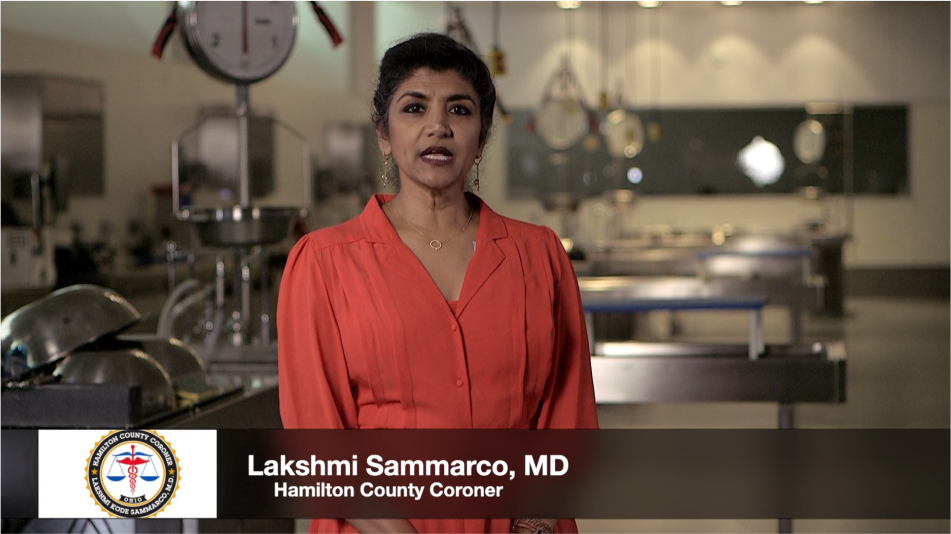

Hamilton County Coroner Video: "Death Certificate Final 1"
- Centers for Disease Control and Prevention: “Physicians’ Handbook on Medical Certification of Death”
- National Association of Medical Examiners page on Death Certificate completion
- State Medical Board of Ohio statement “Regarding the Signing of Death Certificates by the Attending Physician”
- Ohio Revised Code Section 3705.16


Coroner's Office / Crime Laboratory
Address:
4477 Carver Woods Dr - Blue Ash, OH 45242
Phone:
Fax:
(513) 946-8730
Hours of Operation:
8am-4pm Mon-Fri
Laboratory Phone:
Laboratory Fax:
(513) 946-8772